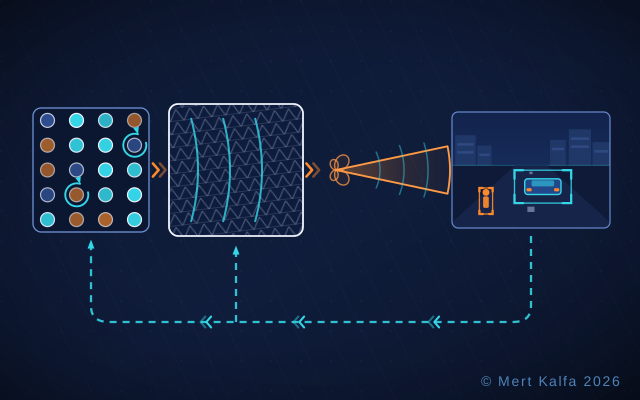
Conventional optimization chases generic numbers like SNR. We posit that the EM environment should be tuned for the actual task — and differentiable solvers make that possible, end to end.
From left to right: analog sensing surface (RIS/metasurface) under full-wave design --> propagation / signal model --> digital twin of scene under analysis --> task performance driven design.
Most optimization chases generic metrics like SNR or throughput. We argue the electromagnetic environment should instead be tuned for the actual downstream goal — localizing a target, extracting meaning, staying aware of a scene. Differentiable solvers make this possible: gradients flow from the task all the way back to physical parameters such as RIS element states and beamforming weights.
This thrust is the synthesis of the first two — turning EM design itself into a task-driven optimization problem, with hardware constraints modeled inside the loop.
Multi-objective, constrained optimization of surfaces & arrays